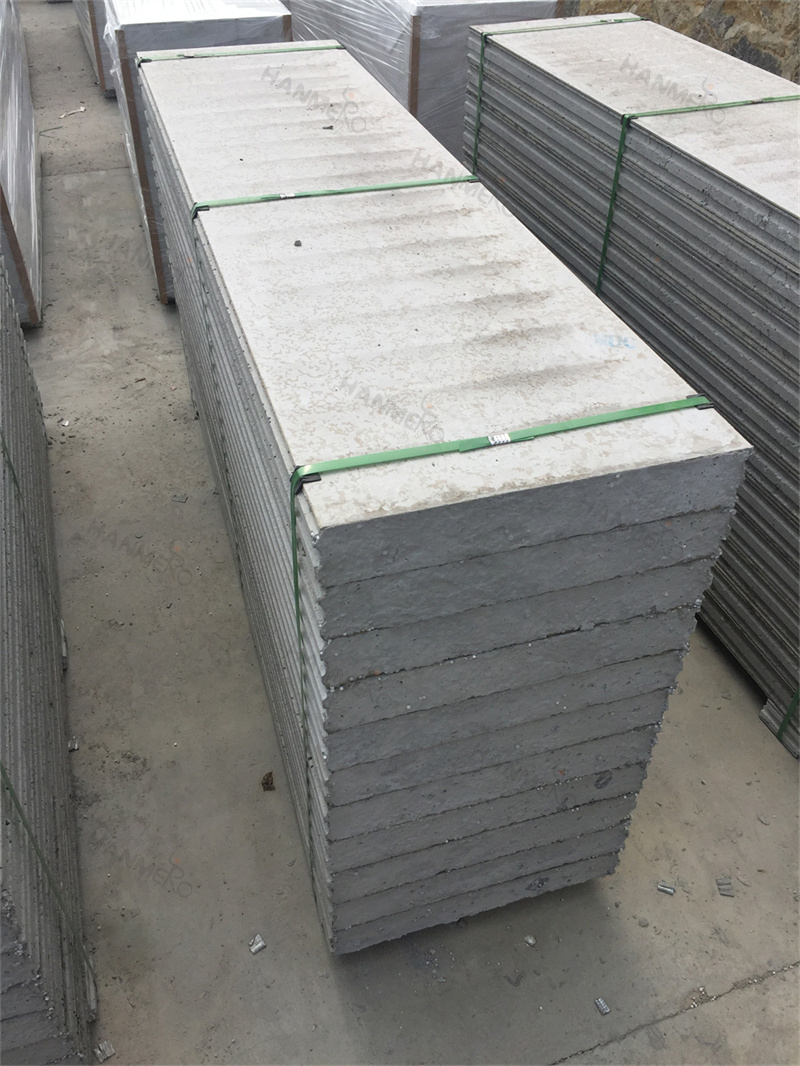
Even though EPS Cement Sandwich Panel is very user-friendly and reliable, many construction teams still make avoidable mistakes during handling and installation that can affect the final wall quality. One of the most common mistakes is transporting and stacking the panels incorrectly on site. If you place EPS Cement Sandwich Panel directly on wet ground or stack it in a way that causes uneven stress, the panels may bend, get damp, or even crack before installation. You should always store panels on a flat, raised dry rack and keep them covered to protect them from long-term rain exposure.
Another frequent mistake is not leaving proper expansion joints or not filling panel joints correctly. If you install all EPS Cement Sandwich Panel units tightly together without considering small thermal expansion and contraction, or use the wrong adhesive material for joint filling, the wall is very likely to develop visible cracks at the joints after a few seasons of temperature change. This problem can be easily avoided by following the manufacturer’s recommended joint treatment method and using the specially matched mortar and anti-crack mesh cloth.
Many teams also make the mistake of applying too thick plaster directly on the panel surface. EPS Cement Sandwich Panel has a very smooth and flat finished surface, and it does not need a thick layer of cement plaster like a traditional brick wall. Applying a very thick heavy plaster layer can cause the material to fall off over time. The correct method is to apply a thin layer of interface agent first, then fill the joints properly, and then apply a thin layer of putty before painting. Avoiding these simple but common mistakes will help you get a perfectly smooth, strong, and long-lasting wall that makes full use of all the performance advantages of EPS Cement Sandwich Panel.