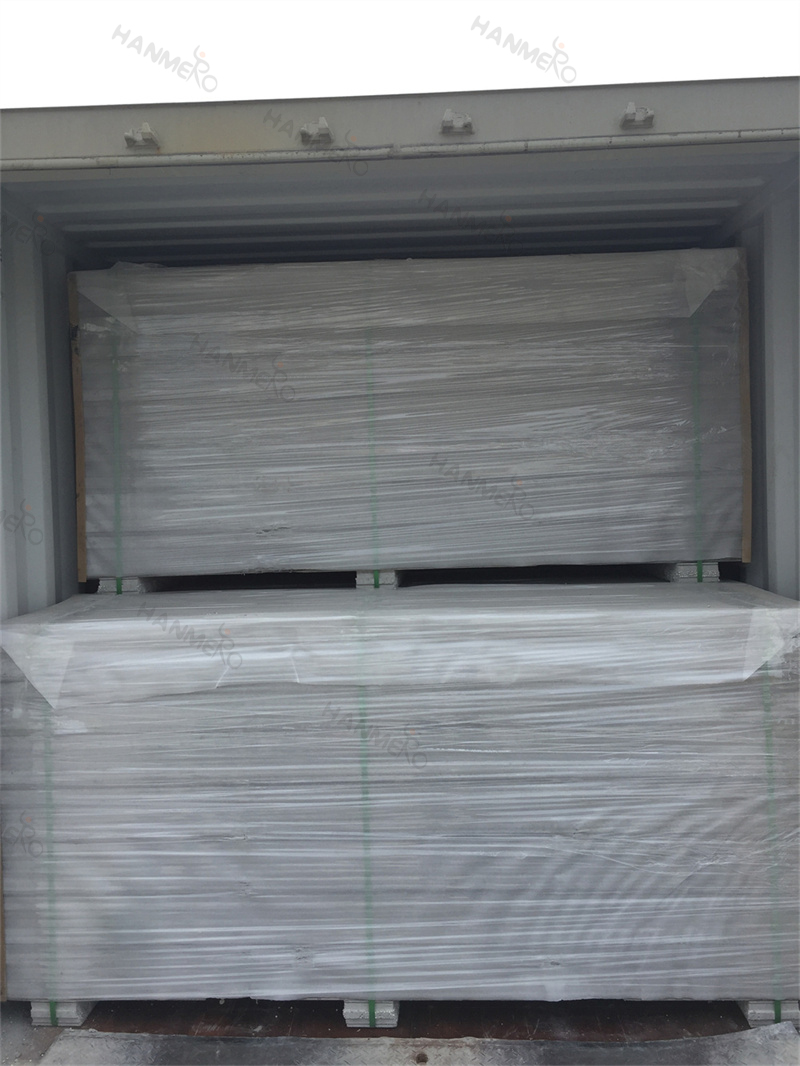
Many factory owners initially consider using cheap gypsum board for their internal partition walls, but when you compare the full lifecycle performance, durability and cost of gypsum board against the EPS Cement Sandwich Panel, the panels are clearly the far better long-term choice for industrial environments. Gypsum board is very soft, fragile, and easily damaged by even minor impacts from moving pallets, forklifts or equipment. A simple bump from a pallet truck will punch a large hole straight through a standard gypsum board wall, requiring immediate costly repairs. The EPS Cement Sandwich Panel on the other hand is extremely impact resistant, and can withstand regular minor industrial impacts without any damage at all. Gypsum board is also not waterproof. If it gets exposed to water from a leak, a sprinkler discharge or even regular high humidity, it will quickly swell, warp, lose all its structural strength, and need to be completely replaced. The EPS Cement Sandwich Panel is 100% waterproof, and will not get damaged even if it is directly exposed to water for long periods of time. Standard gypsum board only has very basic 30 minute fire resistance, which is not enough to meet modern industrial fire safety codes. The EPS Cement Sandwich Panel offers 2 to 4 hours of full fire resistance, which fully meets all industrial building safety requirements. While gypsum board might seem slightly cheaper at the very start, you will end up spending far more money constantly repairing damaged waterlogged gypsum walls, and you will fail your next industrial building inspection. The EPS Cement Sandwich Panel costs a little more upfront, but it will stay completely intact and fully functional for 30+ years, with almost no repairs needed, making it the far more cost-effective choice for any factory environment.