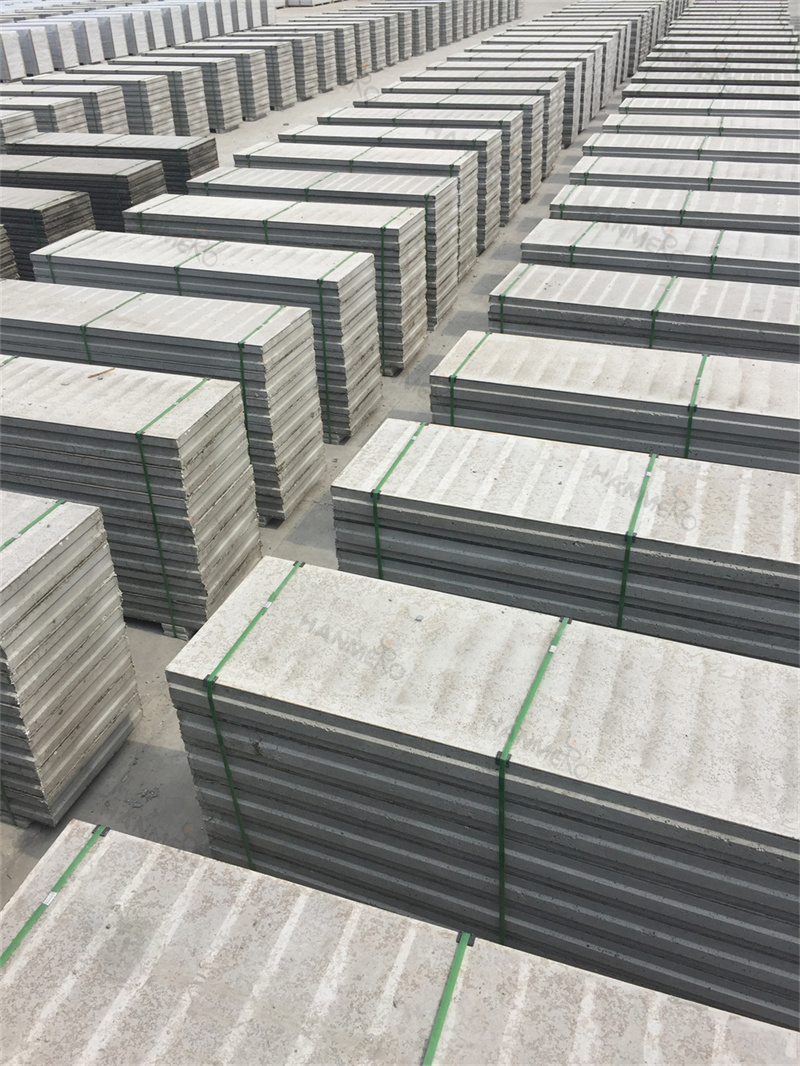
Cold storage facilities that store fresh food, frozen products and temperature sensitive pharmaceutical goods demand extremely high insulation performance from their wall systems, as even tiny amounts of uncontrolled heat leakage can cause massive energy waste and put stored inventory at risk of spoiling. The EPS Cement Sandwich Panel has proven to be one of the most cost effective high performance wall materials for cold storage construction, delivering consistent low thermal conductivity that maintains stable internal temperatures even when external summer temperatures rise above 38 degrees Celsius.
Unlike traditional metal faced cold room panels that lose insulation performance over time as foam core ages, the EPS Cement Sandwich Panel uses a cement skin that is completely resistant to corrosion, minor impact and long term UV exposure. This means the panel’s thermal performance stays almost unchanged for more than 25 years, without the gradual heat leakage issues that often reduce the efficiency of old metal panel cold rooms. Independent field tests show that a 150mm thick EPS Cement Sandwich Panel cold storage wall maintains a stable internal temperature of -18 degrees Celsius, with almost zero temperature fluctuation even when the refrigeration system runs at normal operating power. This reduces the total required refrigeration capacity for new cold storage projects by 20%, cutting initial equipment investment and long term electricity bills significantly.
The cement surface of the EPS Cement Sandwich Panel also creates a much more hygienic wall environment for cold storage operations. It is very easy to clean and sanitize, does not absorb food stains or spilled liquids, and will not grow mold or bacteria even in permanently low temperature high humidity conditions. Many food processing plant operators have switched to this panel for their cold storage expansion projects, as it fully meets strict food safety authority hygiene standards without requiring special expensive anti bacterial wall coatings. The panel is also much more resistant to accidental impact from moving forklifts and cargo pallets, so warehouse teams do not need to spend time repairing dented or damaged wall surfaces every few months.