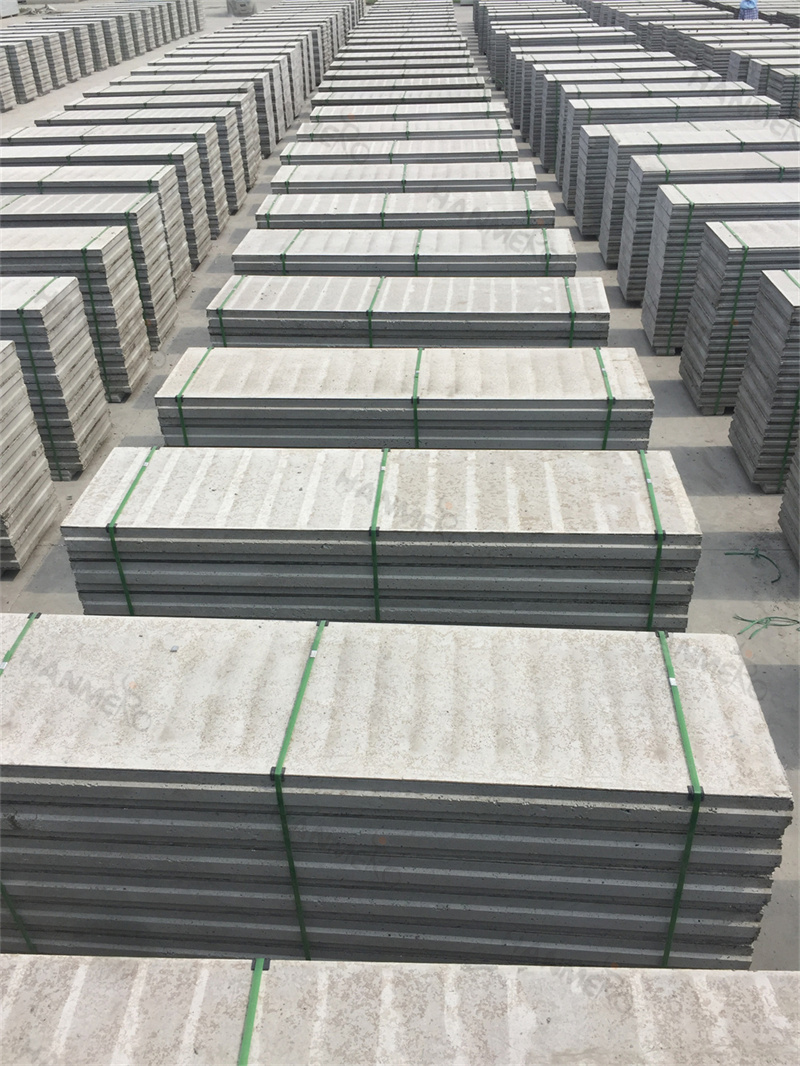
Industrial buildings have unique wall performance requirements that residential and commercial projects often do not need to prioritize. These facilities need walls that are fast to erect, durable under heavy daily use, thermally efficient for temperature controlled spaces, and cost effective across thousands of square meters of coverage. EPS Cement Sandwich Wall Panel has proven to be an ideal solution for all these demands, and it is now being adopted across nearly every segment of industrial construction.
Warehouse developments are one of the most common applications for this material. Large distribution centers often cover tens of thousands of square meters, and builders need a wall system that can be installed extremely quickly to get the facility operational as soon as possible. EPS Cement Sandwich Wall Panel meets this need perfectly, while also providing enough structural strength to support large overhead door openings and resist impacts from moving forklifts and warehouse equipment. For temperature controlled cold storage facilities, the excellent thermal insulation of the EPS core creates a consistent internal temperature environment that drastically reduces refrigeration energy costs and prevents temperature fluctuations that can damage stored goods.
Other key industrial applications include factory production workshops, where the sound insulation performance of the panels reduces noise transmission between different working zones and creates a safer, more comfortable environment for factory staff. The material is also widely used for industrial partition walls, plant office enclosures, logistics park perimeter walls and temporary industrial storage structures. Unlike metal sided industrial walls, the cement surface of EPS Cement Sandwich Wall Panel does not condensate easily in high humidity environments, preventing mold growth and protecting both the building structure and stored inventory from moisture related damage.